
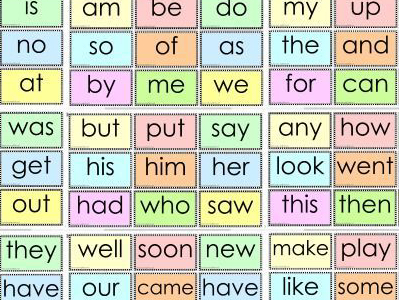
Gail Tompkins (2018) explains “Reading fluency is a bridge between decoding and comprehension” (p. 186). The three components of reading fluency are automaticity, speed, and prosody. Kindergarten through third grade are essential years where children are developing reading fluency and learning high frequency words. High frequency words are difficult for students to decode as their meanings are abstract. The example that Tompkins gave was whale versus what (p.187). Ideally, students start to learn high frequency words in kindergarten and build their knowledge each year through third grade. However, this is not always the case, as students may be dysfluent if they do not reach fluency in fourth grade and beyond.
As I want to teach kindergarten through third grade, it is critical that I provide continuous and varied literacy activities to help my students build fluency. First, my classroom needs to be a literacy rich environment. This means having word walls with high frequency words, as well as labels on items in the classroom. Students need to have ample time to practice reading and writing, as fluency takes time to build. It is important that I model how to read, including the use of inflection, pauses, phrasing, and pacing. This also makes reading much more engaging! Who wants to listen to a monotone speaker read? There is a reason that punctuation is not just periods, but exclamation points, question marks, commas, quotation marks, etc.
Alongside reading fluency is writing fluency. There are also three components of writing fluency: automaticity, speed, and writer’s voice. These go hand-in-hand with reading and need to be practiced every day in order to develop. I remember reading and writing frequently in elementary school and the time allowed for reading and writing became limited as I entered middle school and high school. It’s so important to allow time for our students to read and write in the classroom, especially because they might not be getting this time at home. The activities also need to be engaging for students so they enjoy reading and writing.
Reference: Tompkins, G. E. (2018). Literacy for the 21st century: A balanced approach 7th Ed. New York: Pearson.


Hi Ariana,
I love how that you mentioned “Who wants to listen to a monotone speaker read? There is a reason that punctuation is not just periods, but exclamation points, question marks, commas, quotation marks, etc.” I dislike monotone reading. It is B-O-R-I-N-G. Every time I read to my students, I always read with passion and with emotion. The way how you explained you want your class to be is outstanding! We need more teachers like you who will encourage students to read and write.
As educators, we know that not all of the students will have proper support at home and it is sad. We need to get to know our students so we can better assist them. If students do not get enough support at home, then we should give that support. As educators, we need to always be that support system. If students know that at least their teacher care and want the best for them in education, then they will enjoy reading and writing.
Thank you for sharing.
-Ana Rodriguez
LikeLike
You have started the blog powerfully by quoting Gail Tompkins “Reading Fluency is a Bridge Between Decoding and Comprehension”, which explains the importance of eloquence in a nut-shell. The article has helped me understand that young students may not comprehend high-frequency words as their knowledge is built through the third grade.
I support the literacy activities that you would like to implement such as words on the walls and label items to assist your students to become eloquent. Additionally, you mention that the three components of writing fluency, namely, speed, automaticity, and writer’s voice, need to be practiced daily basis to develop, and I could not agree more. The teaching approaches highlighted in your blog are engaging and enjoyable for students, thus beneficial.
LikeLike