

Nurturing Children’s Literacy Development

76F-HelpingEmergingReadersIn my first semester of teaching observations, I observed first grade, third grade and two fourth grade classrooms. It was amazing to see the growth that occurs between first and third grade. The formative years of reading and writing for children are kindergarten through third grade. Tompkins discusses the three stages of reading and writing: emergent, beginning and fluent (Tompkins, 2018, p. 120). It is essential for teachers to monitor the growth of their students through monitoring, as discussed in the last blog post about assessments.

One of the key goals I have as a teacher is to foster an interest in reading and writing for my students. I’m really excited about using literacy centers in my classroom to help engage students. Tompkins outlines twelve centers: bag a story, clipboards, games, library, listening, making words, messages, poetry frames, reading the room, research, story reenactment, and word sort (2018, p.110). The great thing about having different centers is it allows students to focus on one activity either independently or in groups, establish routines in the classroom, and allow for choice. Daniels and Bizar (1998) state, “Literacy centers promote student collaboration, facilitate student motivation, and provide targeted practice for students.”

Routines are key for students, especially when it comes to reading and writing. Tompkins (2018, p.117) offers ten great routines to teach the alphabet, which is especially helpful for new teachers like myself. Some of these routines include alphabet books, letter containers, letter sorts, and whiteboards. During my teaching observations, I noticed in the first grade classroom that every student had a whiteboard they could use to practice their writing as a class. The teacher would model the word and have the students repeat. Especially in the early grades, it is important that students learn how to write through modeling.

Finally, morning messages is another routine that I would really like to incorporate in my classroom. Tompkins (2018) offered a few variations of morning messages, including fill-in-the-blank morning messages, one child dictates a message to share with classmates, and children creating a message collaboratively. All of these ideas are great at different stages for students, as well as throughout the year. The key for developing students’ literacy in reading and writing is to offer various activities and consistent routines for students that allow for stability, as well as growth and engagement. There are so many distractions in our world today that it is important to keep this is in mind in the classroom. As attention spans have become limited, we should work with, rather than against this.

References:

Tompkins, G. E. (2018). Literacy for the 21st century: A balanced approach 7th Ed. New York: Pearson

Daniels, Harvey & Bizar, Marilyn (1998). Methods that matter: Six structures for best practice classrooms. York, ME: Stenhouse.
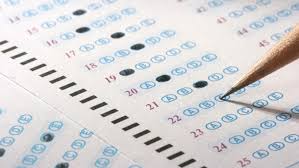

Assessments vs. Evaluations

Unknown

When you see the words “assessment” and “evaluation,” do you think of them being interchangeable? I used to think that was the case, but when it comes to teaching, they are quite different. Assessments are ongoing and allow for immediate feedback. Whereas evaluations are summative and usually given at the end of a unit.

As a student, I had a great deal of anxiety when it came to testing. I would create detailed study guides for tests and make sure that I studied as much as I could. I wanted to do as well as possible and always shoot for an “A.” After the test, the likelihood that I would actually retain this information was pretty slim. Now that I’m entering the teaching profession, I want to move away from testing my students in way that their focus is on the test, or evaluation.

Tompkins (2018) outlines four steps to help guide assessments: planning for assessment, monitoring students’ progress, evaluating students’ learning, and reflecting on students’ learning. The two steps that stood out to me were Step 2: Monitoring Students’ Progress and Step 4: Reflecting on students’ learning. These two steps, before and after the evaluation, can be transformative for students. If I had time to reflect on my understandings, rather than ending with a test, I may have had a great opportunity to retain more information. Step 2, while time consuming for teachers, is imperative to make sure if scaffolding needs to take place for any students. When this is completed before the evaluation, it allows students greater opportunities to ask questions and as a teacher, helps to check for understanding. I do not want my students to feel that they are only learning material to pass a test or evaluation. I want my students to be engaged and able to use their knowledge outside the classroom.

Advancements in technology have allowed many tools to be created to determine students’ reading levels, such as the Developmental Reading Assessment, Fountas & Pinnell Benchmark Assessment, and the Scholastic Reading Inventory (Tompkins, 2019, p.85). For those in the classroom, have you found any particular tools to be helpful?

Finally, high-stakes testing is something that I struggle with as an aspiring teacher. This is something that unfortunately is mandated in schools. I remember when the California High School Exit Exam was introduced and the anxiety I felt when I was a student. I want to give my students testing strategies to help ease their stress and anxiety when it comes to testing. I hope that high-stakes testing will be eventually eliminated, but understand that this is something that both teachers and students must face in the meantime. Are there any testing strategies that you recommend in your classroom?

Reference: Tompkins, G. E. (2018). Literacy for the 21st century: A balanced approach 7th Ed. New York: Pearson.

Reading and Writing Go Hand in Hand

I never thought much of the strategies behind reading and writing when I was in school. Now that I’m beginning my journey to becoming a teacher, the task of teaching these strategies to future students is incredibly important to me. There is such power that comes from learning to read and write. I loved learning to read as a child, but found the task of writing to be quite daunting. I didn’t think about how “reading and writing are reciprocal processes” (Tompkins, 2018, p. 61). The five stages of reading and writing have overlapping tasks, such is the case in Stage 3: Responding in the Reading Process and Revising in the Writing Process. If the stages in reading and writing are similar, why is it then that I found reading to be exciting, but writing to be intimidating?

I would argue that reading and writing were not integrated together as much as they could have been while I was in school. I had teachers who read stories aloud, as well as shared reading take place in the classroom. However, guided reading and partner reading were not activities that took place very often. The process of writing was also not discussed after reading. By discussing the tools the writer used after reading, it can help guide the process of writing. This can take place in Stage 4: Exploring in the Reading Process.

Through my teaching observations, students work much more often in groups and reading is scaffolded for different levels. While independent reading is the most authentic type of reading (Tompkins, 2018, p. 44), it is essential that students are offered support when learning to read and build up to independent reading. Prereading is also an essential first step so that students can prepare before reading, including making predictions in reading logs and through discussions. This is a way to activate the writing process alongside the reading process.

In my classroom, I would like to include reading and writing workshops. Lucy Calkins’ Reading and Writing workshop were being used in my observations and I found it to be very engaging for the students. Here is the link for an overview of the workshops: http://www.unitsofstudy.com/shared/resources/Overview%20of%20A%20Day’s%20Reading%20or%20Writing%20Workshop.pdf

I strive to make reading and writing enjoyable for my students. The foundational skills are essential and can open the pathway to many doors. What are strategies that you use to teach reading and writing to students in your classroom?


Reference: Tompkins, G. E. (2018). Literacy for the 21st century: A balanced approach 7th  Ed. New York: Pearson.

white notes beside a pencil on brown wooden surface
Photo by Tirachard Kumtanom on Pexels.com